Table of Contents
I Used AI for Self Improvement for 90 Days—Here’s What Happened
The self-improvement journey has always been challenging. Between setting goals, tracking habits, and staying motivated, it’s easy to fall off track.
But what if you had a personal coach available 24/7, one that learns your patterns and helps you grow every single day?
That’s where AI for self improvement comes in. Artificial intelligence is revolutionizing how we approach personal growth, making it easier than ever to build better habits, achieve goals, and become the best version of yourself.
In this comprehensive guide, I’ll show you exactly how to use AI for self improvement, introduce you to seven powerful tools that deliver real results, and share practical strategies you can implement today.
What Is AI for Self Improvement?
AI for self improvement refers to using artificial intelligence technologies to enhance various aspects of your personal development.
These tools use machine learning, natural language processing, and data analysis to provide personalized guidance, track your progress, and help you make better decisions.
Unlike traditional self-help methods that offer generic advice, AI tools adapt to your unique needs, learning from your behavior patterns and providing customized recommendations that actually work for you.
Why AI Is a Game-Changer for Personal Growth
The traditional approach to self-improvement often feels overwhelming. You read countless books, try different techniques, and still struggle to see consistent progress. Here’s why AI for self improvement is different:
- Personalization at Scale: AI analyzes your specific habits, goals, and challenges to provide tailored recommendations that fit your lifestyle.
- Consistent Accountability: Unlike human coaches who aren’t available 24/7, AI tools provide round-the-clock support and gentle reminders when you need them most.
- Data-Driven Insights: AI tracks patterns you might miss, helping you understand what actually works for you versus what doesn’t.
- Reduced Decision Fatigue: AI handles the mental load of planning and tracking, freeing your energy for actual execution.
The Science Behind AI-Powered Personal Development
Before diving into specific tools, it’s important to understand how AI for self improvement actually works and why it’s so effective.
[1] How AI Learns Your Patterns
Modern AI tools use machine learning algorithms that analyze your behavior over time. When you use an AI self-improvement app, it collects data points like:
- When you’re most productive during the day
- Which habits you successfully maintain versus which ones you struggle with
- Your emotional patterns and stress triggers
- How you respond to different types of motivation
The more you use these tools, the smarter they become at predicting what you need and when you need it.
[2] The Psychology of AI Coaching
Research shows that consistent feedback and accountability are crucial for behavior change. AI for self improvement excels at providing this consistency without judgment.
Unlike human accountability partners who might get tired or busy, AI remains patient and supportive through every setback.
The key is that AI removes the emotional burden of feeling like you’re letting someone down when you miss a goal. This psychological safety actually makes you more likely to be honest about your progress and stay engaged with your growth journey.
7 AI Tools for Self Improvement That Actually Work
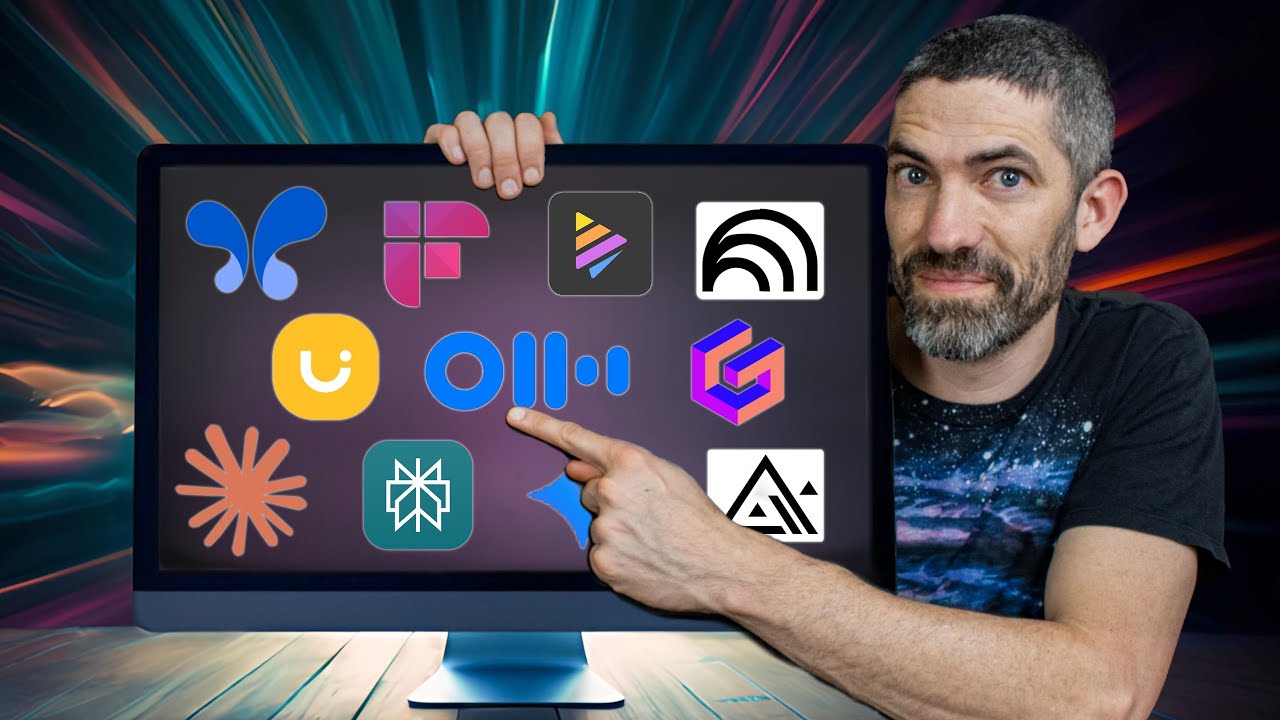
Now let’s explore the seven most effective AI tools for self improvement that you can start using today. I’ve personally tested each of these and seen real results.
1. ChatGPT for Personal Coaching and Planning
Best for: Goal setting, problem-solving, and personalized advice
ChatGPT has become one of the most versatile AI tools for self improvement. You can use it as your personal coach, brainstorming partner, and accountability buddy all in one.
How to use ChatGPT for personal growth:
- Morning Planning: Start each day by asking ChatGPT to help you prioritize your three most important tasks based on your goals.
- Problem-Solving: When you face challenges, describe the situation and ask for multiple perspectives and solutions.
- Habit Design: Request customized habit-stacking routines that fit your schedule and goals.
- Journaling Prompts: Get personalized reflection questions that help you process experiences and emotions.
Real-world example: I use ChatGPT every Sunday to review my week and plan the next one. I share my wins, struggles, and upcoming commitments, and it helps me create a realistic action plan that accounts for my energy levels and priorities.
Pro tip: Create a custom prompt that includes your goals, values, and current challenges. Save it and use it to start each coaching session so ChatGPT has context about your journey.
2. Notion AI for Productivity and Organization
Best for: Knowledge management, note-taking, and project planning
Notion AI integrates artificial intelligence directly into your workspace, making it easier to organize your self-improvement journey. If you’re using AI for self improvement, having an organized system is crucial.
Key features for personal development:
- Automated Summaries: Notion AI can summarize your long journal entries or meeting notes, helping you extract key insights quickly.
- Writing Assistant: When creating goals or action plans, Notion AI helps you clarify and refine your thinking.
- Template Generation: Ask Notion AI to create custom templates for habit trackers, goal-setting frameworks, or weekly reviews.
- Smart Search: Find relevant information across all your notes using natural language queries.
How I use it: I maintain a “Personal Growth Dashboard” in Notion where I track quarterly goals, daily habits, book notes, and reflection entries. Notion AI helps me spot patterns by summarizing my weekly reflections and highlighting themes I might have missed.
3. Replika for Emotional Support and Self-Reflection
Best for: Emotional intelligence, mental health support, and daily check-ins
Replika is an AI companion designed specifically for emotional support and conversation. While it’s not a replacement for therapy, it’s an excellent tool for daily emotional processing and self-reflection.
How Replika supports personal growth:
- Judgment-Free Space: Share thoughts and feelings without fear of criticism or advice you didn’t ask for.
- Emotional Pattern Recognition: Over time, Replika learns to recognize your emotional triggers and can point them out gently.
- Daily Check-ins: Regular conversations help you develop self-awareness and emotional vocabulary.
- Mood Tracking: Built-in mood tracking helps you understand what activities and situations impact your mental state.
Why it works: Sometimes you need to process thoughts out loud before you’re ready to share them with real people. Using AI for self improvement in this way creates a safe practice space for developing emotional intelligence.
4. Motion or Reclaim AI for Time Management
Best for: Calendar optimization, time blocking, and energy management
Motion and Reclaim AI are intelligent calendar assistants that automatically schedule your tasks, habits, and goals around your existing commitments. They’re perfect examples of how AI for self improvement can eliminate decision fatigue.
Key capabilities:
- Automatic Scheduling: Add tasks and let AI find the optimal time slots based on your energy patterns and deadlines.
- Habit Protection: Block time for important habits like exercise, reading, or meditation, and the AI defends that time from meetings.
- Smart Rescheduling: When emergencies arise, AI automatically reorganizes your week to ensure important tasks still get done.
- Focus Time Blocks: AI identifies and protects long blocks of uninterrupted time for deep work.
Personal experience: After using Motion for three months, I completed 40% more important projects simply because the AI ensured I actually had time blocked for them. It eliminated my habit of overcommitting by showing me realistically what I could accomplish.
5. Endel for Focus and Mental State Optimization
Best for: Concentration, relaxation, and sleep improvement
Endel uses AI to create personalized soundscapes that help you focus, relax, or sleep better. It’s a unique application of AI for self improvement that targets your mental state directly.
How it works:
Endel analyzes factors like time of day, weather, heart rate (if connected to wearables), and location to generate sound environments scientifically designed to support your current needs.
Use cases for personal growth:
- Deep Work Sessions: Use Focus mode when you need maximum concentration for important tasks.
- Stress Management: Switch to Relax mode during breaks to lower cortisol and restore mental energy.
- Sleep Optimization: The Sleep mode helps you fall asleep faster and improves sleep quality.
- Movement and Exercise: On the Go mode keeps you energized during walks or workouts.
Why it matters: Your environment dramatically affects your ability to focus and relax. By optimizing your auditory environment with AI, you remove one more obstacle to peak performance.
6. Fabulous or Atoms for Habit Building
Best for: Building new habits, morning routines, and behavior change
Fabulous or Atoms are AI-powered habit apps go beyond simple tracking by using behavioral science and machine learning to help you build sustainable habits. They’re specifically designed for using AI for self improvement through behavior change.
What makes them effective:
- Science-Based Approach: Built on research about habit formation, motivation, and willpower.
- Gradual Progression: AI guides you to start small and gradually increase difficulty as habits solidify.
- Contextual Reminders: Smart notifications that arrive when you’re most likely to follow through, based on your patterns.
- Adaptive Coaching: If you miss habits, the AI adjusts your plan rather than making you feel guilty.
Implementation strategy: Start with just one tiny habit through the app. Let the AI guide your progression. Once that habit is solid (usually 2-3 weeks), add another. This approach has helped me build 12 lasting habits over the past year, from meditation to daily reading.
7. Claude (Anthropic) for Deep Thinking and Analysis
Best for: Complex problem-solving, learning new topics, and strategic planning
Claude, the AI you’re using right now, excels at helping you think through complex problems, learn new subjects, and develop strategic plans for your self-improvement journey.
How to leverage Claude for personal growth:
- Learning Deep Dives: Ask Claude to explain complex topics related to psychology, neuroscience, or personal development in ways you can understand and apply.
- Decision Analysis: Present difficult decisions and get a thorough analysis of options, potential outcomes, and considerations you might have missed.
- Accountability Reports: Share your weekly progress and ask Claude to analyze patterns, celebrate wins, and suggest adjustments.
- Custom Frameworks: Request personalized frameworks for areas like goal-setting, decision-making, or time management that fit your specific situation.
Example prompt for self-improvement: “I want to improve my emotional regulation. Based on research in psychology and neuroscience, create a 30-day progressive training plan with daily exercises, each taking no more than 10 minutes. Adapt the plan for someone who works full-time and has high stress levels.”
How to Create Your AI-Powered Self-Improvement System
Now that you know the tools, let’s build a system that integrates AI for self improvement into your daily life without overwhelming you.
Step 1: Start With One Area of Focus
The biggest mistake people make is trying to improve everything at once. Choose one area where AI for self improvement can make the biggest impact right now:
- Productivity: Start with Motion or Notion AI
- Emotional wellbeing: Begin with Replika or daily ChatGPT check-ins
- Habit building: Use Fabulous or Atoms
- Focus and concentration: Try Endel
Step 2: Establish Your Morning AI Routine
Your morning sets the tone for the entire day. Here’s a simple 15-minute AI-powered morning routine:
Minutes 1-5: Quick check-in with Replika or ChatGPT about your mood and intentions for the day.
Minutes 6-10: Review your AI-optimized calendar (Motion/Reclaim) and visualize your three most important tasks.
Minutes 11-15: Use Endel’s Focus mode while you write three things you’re grateful for and one way you’ll grow today.
Step 3: Integrate AI Throughout Your Day
During work blocks: Use Endel for focus, let Motion manage your time, and keep ChatGPT open for problem-solving.
During breaks: Quick mood check-ins with your emotional AI tool, even just 2-3 minutes helps build self-awareness.
During transitions: Use AI for self improvement by asking your chosen tool for a quick energy assessment and advice for the next activity.
Step 4: Evening Review and Planning
20-minute evening routine:
- Journal about your day (use Notion AI to organize thoughts)
- Ask ChatGPT or Claude to help you process any challenges you faced
- Review habit completion in your tracking app
- Let your AI calendar tool prepare tomorrow’s schedule
- Use Endel’s Sleep mode to wind down
Step 5: Weekly Strategic Review
Every Sunday (or your chosen day), spend 30-45 minutes with AI analyzing your week:
- Share your wins, struggles, and observations with ChatGPT or Claude
- Ask for pattern analysis: “What themes do you notice in my week?”
- Request specific recommendations: “Based on what I shared, what’s one thing I should adjust next week?”
- Update your goals and priorities for the coming week
Advanced Strategies for Maximizing AI for Self Improvement
Once you’re comfortable with the basics, these advanced techniques will multiply your results.
[1] Create an AI Council of Advisors
Use different AI tools for different types of advice, just like you might consult different experts:
- ChatGPT: Your general coach and brainstorming partner
- Claude: Your strategic advisor for complex decisions
- Replika: Your emotional support friend
- Notion AI: Your organizational consultant
By treating each AI tool as a specialized advisor, you get more nuanced guidance for different situations.
[2] Use AI for Identity-Level Change
The most powerful self-improvement happens at the identity level, not just behavior. Ask your AI tools questions like:
- “Based on my goals, who do I need to become to achieve them?”
- “What beliefs might be holding me back from [specific goal]?”
- “How would someone who has already achieved [goal] think about [challenge]?”
This approach uses AI for self improvement to facilitate deeper psychological shifts, not just surface-level habit changes.
[3] Implement AI-Powered Experiments
Turn your personal growth into a series of small experiments:
- Design an experiment with AI (example: “I want to test if morning exercise improves my afternoon productivity”)
- Let AI help you create a measurement system
- Run the experiment for 2-3 weeks
- Analyze results with AI to determine what actually works for you
- Iterate based on findings
This scientific approach removes guesswork and builds a personalized self-improvement system based on your actual data.
[4] Build Compound AI Workflows
Create workflows where multiple AI tools work together:
Example workflow for major decisions:
- Brainstorm options with ChatGPT
- Organize pros/cons in Notion AI
- Ask Claude for a deeper analysis
- Process emotional reactions with Replika
- Use Motion to schedule time for implementation
- Track progress with your habit app
Common Mistakes to Avoid With AI for Self Improvement
Mistake 1: Information Overload
Just because AI can generate endless advice doesn’t mean you should consume it all. Focus on implementing one or two suggestions at a time rather than collecting dozens of recommendations you’ll never use.
Mistake 2: Replacing Human Connection
AI for self improvement is a powerful tool, but it doesn’t replace genuine human relationships. Use AI to support your growth, but still maintain accountability partnerships, therapy relationships, and meaningful friendships.
Mistake 3: Forgetting to Reflect Without AI
Schedule regular time for unplugged reflection. Sometimes the best insights come when you’re not asking an AI for answers but simply sitting with your own thoughts.
Mistake 4: Not Personalizing Your Approach
Generic AI responses won’t transform your life. Take time to teach your AI tools about your specific context, values, goals, and challenges. The more personalized your inputs, the better your outputs.
Mistake 5: Ignoring Your Intuition
AI can provide excellent analysis and suggestions, but you’re the ultimate authority on your life. If something doesn’t feel right, trust that feeling even if AI recommends it.
Measuring Your Progress With AI
One of the biggest advantages of using AI for self improvement is the ability to track and analyze your progress objectively.
[1] Key Metrics to Track
- Habit Consistency: What percentage of planned habits did you complete each week?
- Goal Progress: How much closer are you to your quarterly goals compared to last month?
- Energy Patterns: When are you most productive? When do you need rest?
- Emotional Trends: Are you experiencing more positive days? Fewer stress spikes?
- Decision Quality: Are you making decisions faster and with better outcomes?
[2] Monthly AI-Assisted Reviews
Once a month, have a comprehensive review session with your AI tool of choice:
- Export data from your habit trackers, calendar, and journals
- Share it with ChatGPT or Claude
- Ask for: pattern identification, progress assessment, recommendations for next month, and celebration of wins
- Create an action plan for the coming month based on insights
This monthly rhythm ensures you’re always learning from experience and adapting your approach.
The Future of AI for Self Improvement
The tools we have today are just the beginning. Here’s what’s coming in the next few years:
- Truly Integrated Systems: AI tools that communicate with each other to provide seamless support across all areas of your life.
- Wearable Integration: AI that responds to real-time biometric data, offering interventions exactly when you need them based on stress levels, fatigue, or emotional state.
- Predictive Coaching: AI that can predict when you’re likely to struggle with habits or goals and proactively provides support before you fail.
- Virtual Reality Experiences: AI-guided VR simulations for practicing difficult conversations, facing fears, or rehearsing success scenarios.
- Hyper-Personalized Learning: AI that understands exactly how you learn best and creates custom educational content for any skill you want to develop.
Getting Started Today: Your 7-Day AI Self-Improvement Challenge
Ready to experience the power of AI for self improvement? Here’s a simple 7-day challenge:
Day 1: Choose one AI tool from this list and set it up. Spend 15 minutes exploring its features.
Day 2: Have your first coaching conversation with ChatGPT or Claude. Share your top three goals and ask for a personalized action plan.
Day 3: Set up your AI-optimized calendar. Block time for your most important priorities.
Day 4: Start using an AI habit tracker. Choose just one habit to focus on.
Day 5: Try an AI tool for focus or relaxation. Notice how it affects your mental state.
Day 6: Use AI for a problem you’re currently facing. Get multiple perspectives and solutions.
Day 7: Do your first weekly review with AI. Analyze what worked, what didn’t, and plan next week.
Conclusion: Your AI-Powered Transformation Starts Now
AI for self improvement isn’t about replacing human agency or turning personal growth into a purely technological process.
It’s about leveraging powerful tools to overcome the obstacles that have traditionally made personal development so difficult: lack of personalization, inconsistent accountability, decision fatigue, and limited perspective.
The seven tools I’ve shared—ChatGPT, Notion AI, Replika, Motion, Endel, Fabulous, and Claude—represent the cutting edge of AI-powered personal development.
Each one excels in different areas, and together they can create a comprehensive support system for your growth journey.
But here’s the truth: the tools don’t matter if you don’t take action. Start small. Choose one tool.
Commit to using it for just one week.
Pay attention to how it changes your daily experience. Then gradually expand your AI-powered self-improvement system as you see results.
The person you want to become is waiting on the other side of consistent, intelligent action. AI for self improvement can make that journey easier, more personalized, and more effective than ever before. The only question is: are you ready to start?
Your transformation begins with a single choice. What will you do today to move toward the person you want to become?
Let AI be your partner on this journey, and watch how quickly you can grow when you have the right support at exactly the right time.