It was a Tuesday night. I was lying in bed, thumb moving on its own, scrolling through videos I didn’t even care about. My eyes hurt. My mind felt foggy. And when I finally checked my screen time report, my stomach dropped.
Almost six hours. Every single day. Just on my phone.
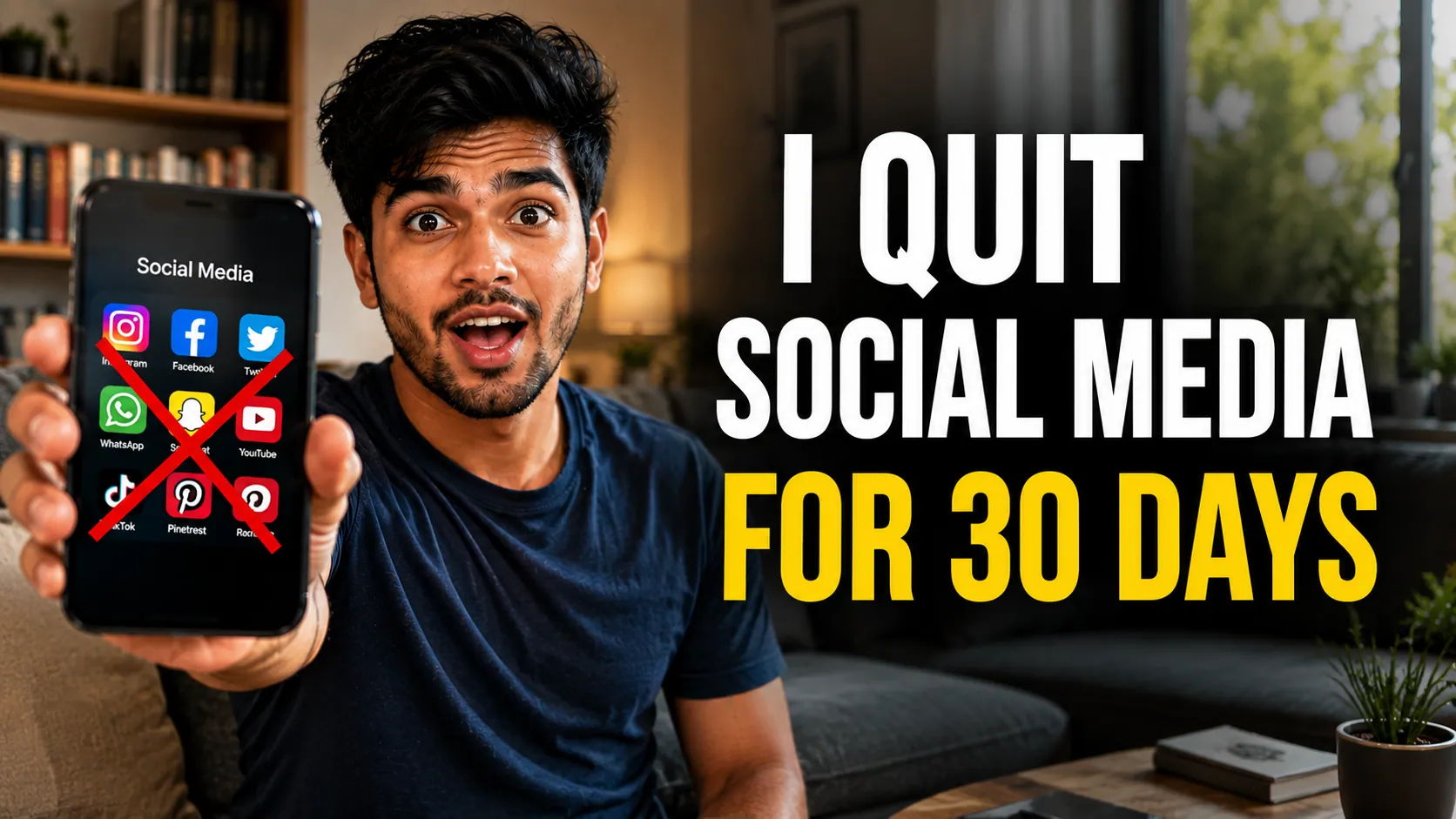
That’s the exact moment I decided to quit social media for 30 days. Not because it was trendy. Not because someone dared me. But because I was simply tired of feeling tired.
This is the honest, no-filter story of what happened when I quit social media for 30 days — the hard days, the boring days, and the days that quietly changed everything.
If you’ve ever wondered what a real social media detox feels like, keep reading. This is not a highlight reel. This is the truth.
Table of Contents
Why I Decided to Quit Social Media for 30 Days
I didn’t wake up one morning and suddenly hate my phone.
It built up slowly, the way most bad habits do.
I’d open Instagram to reply to one message and somehow end up watching reels for 40 minutes. I’d close a app feeling worse than before I opened it. I compared my life to strangers online almost every single hour, without even realizing it.
So I made a decision. I was going to quit social media for 30 days and find out what it actually does to a person’s mind, mood, and daily life.
No apps. No sneaky scrolling. No exceptions.
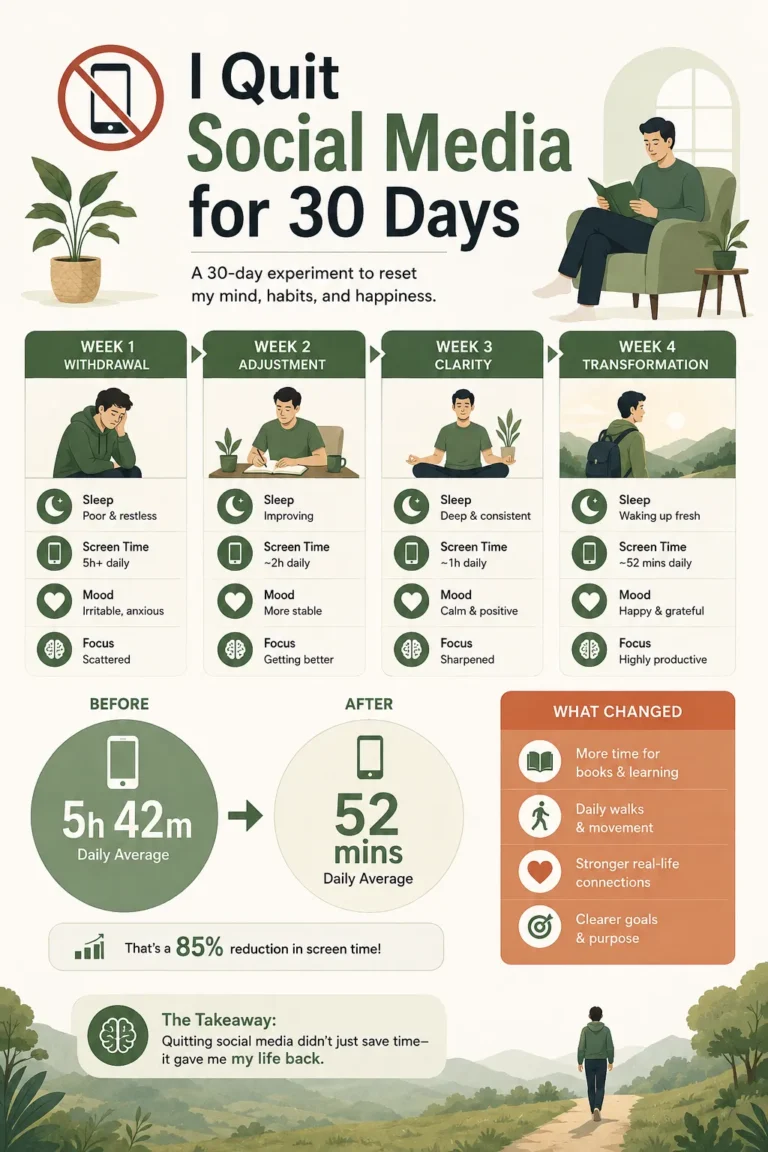
My Screen Time Before I Quit Social Media
Before I share what changed, let me be honest about where I started. No sugarcoating.
Here’s what my life looked like before this social media detox:
- Average screen time: 5 hours 42 minutes a day
- Phone pickups: around 96 times a day
- Sleep: barely 5 hours a night
- Mood: anxious, distracted, and constantly comparing myself to others
If you’re reading this and quietly nodding, you’re not alone. A huge number of people feel exactly this way and never talk about it.
How I Prepared for My 30-Day Social Media Detox
I didn’t just delete the apps and hope for the best. I planned this like a real challenge, because I knew willpower alone wasn’t going to cut it.
Here is exactly what I did before starting my 30 day no social media challenge.
Step 1: I Deleted the Apps, Not Just Logged Out
Logging out isn’t enough. Your brain still knows the app is one tap away. I fully deleted Instagram, Facebook, TikTok, and Twitter from my phone.
Step 2: I Told My Friends and Family
I let people close to me know I was doing a 30-day social media detox. This kept me accountable and stopped random tags and messages from pulling me back in.
Step 3: I Found a Replacement Habit
Every time I felt the urge to scroll, I picked up a book, went for a short walk, or simply drank a glass of water. Small swaps made a huge difference over time.
Step 4: I Started a Simple Journal
Each night, I wrote just three lines about how I felt that day. This tiny habit turned out to be the most powerful part of the entire experiment.
Week 1: The Withdrawal Phase
The first three days were rough. I won’t pretend otherwise.
My hand kept reaching for my phone out of pure habit, almost like muscle memory. I felt bored. Restless. A little anxious, like I was missing something important happening somewhere.
But around day four, something shifted.
I started noticing small things again. The sound of birds outside my window. The taste of my morning coffee. The way sunlight hit my kitchen table in the afternoon. Things I hadn’t truly noticed in years.
Week 2: Something Started to Shift
By the second week of quitting social media, the urge to check my phone had dropped a lot.
I started sleeping better. I woke up without instantly reaching for my phone. My mornings felt calmer instead of chaotic and rushed.
I also noticed something strange. I had more time. When you’re not scrolling for hours a day, your day genuinely feels longer, in a good way this time.
Week 3: I Didn’t Miss It Anymore
This was the week that surprised me the most.
I stopped thinking about social media almost completely. No urge to check notifications. No fear of missing out. No quietly comparing my life to a stranger’s vacation photos.
Instead, I picked up an old hobby I had completely forgotten about, sketching. I finished two books I had been “meaning to read” for over a year. I had real, deep conversations with people, instead of half listening while secretly scrolling.
Week 4: The Real Changes
By the final week, I genuinely felt like a slightly different person. Calmer. More focused. More present in my own life.
Here is exactly what changed by the end of my 30-day social media detox:
- My screen time dropped from 5+ hours to under 1 hour a day
- My sleep improved from around 5 hours to nearly 7-8 hours a night
- My anxiety noticeably went down
- My focus at work and studies improved
- I felt genuinely happier, without really trying to
What I Learned After Quitting Social Media for 30 Days
Here are the biggest lessons from this whole experience.
- Boredom is not your enemy. It’s actually where creativity quietly comes from.
- Most of what you see online is a performance, not real life.
- You don’t need to know everything happening online in real time.
- Real connections feel a hundred times better than likes and comments ever could.
- Your brain genuinely needs quiet time to think clearly.
The Hard Truths No One Tells You About a Social Media Detox
It wasn’t all peace and sunshine. Let me be real with you here.
I missed a few important updates from friends. I felt slightly disconnected from group chats and jokes everyone else was talking about. There were a couple of days I felt genuinely lonely, if I’m being fully honest.
A social media detox isn’t magic. It’s a trade-off. You give up quick connection in exchange for deeper focus and calm. For me, that trade was completely worth it.
Did I Go Back to Social Media?
Yes, but very differently this time.
I didn’t delete my accounts forever. I reinstalled a couple of apps after finishing the 30 days, but with new personal rules:
- No notifications turned on, ever
- No scrolling first thing in the morning
- A strict time limit of 20 minutes a day
- No social media at all on at least one full day a week
Quitting social media for 30 days didn’t make me hate it forever. It simply taught me how to use it, instead of letting it quietly use me.
How You Can Try a 30-Day Social Media Detox Too
If you’re thinking about trying this yourself, here is a simple step-by-step plan you can follow starting today.
Step 1: Pick a start date and mark it clearly on your calendar.
Step 2: Delete the apps completely, don’t just mute or log out.
Step 3: Tell someone close to you, so you have real accountability.
Step 4: Replace scrolling time with one small habit, like walking, reading, or journaling.
Step 5: Track your mood daily, even if it’s just one honest line.
Step 6: Give yourself grace on the hard days. This is about progress, not perfection.
You don’t need to be perfect at this. You just need to start.
If you decide to try this challenge, I would genuinely love to hear how it goes for you. Drop a comment below and share your day one feelings. Future you will thank you for it.
Summary
I quit social media for 30 days to fix my sleep, focus, and mood. The first few days were genuinely hard, but by week two, my mind already felt lighter. By the end of the month, my screen time had dropped by more than 80 percent, my sleep improved, and I felt calmer and more present in everyday life. I now use social media on my own terms, instead of it quietly controlling mine.
Conclusion
Quitting social media for 30 days changed the way I see my phone, my time, and honestly, myself.
This isn’t about hating social media. It’s about quietly taking back control of your own attention.
If your thumb feels tired, if your mind feels foggy, or if you just feel a little “off” lately, maybe this is your sign to try it too.
Start small. Start today. Your own 30 days could change more than you expect.
Frequently Asked Questions
Is quitting social media for 30 days actually worth it?
Yes, for most people it improves sleep, focus, and mood within the first two weeks of the detox.
What happens when you quit social media for a month?
You may feel restless in the first few days, followed by better sleep, more free time, and noticeably lower anxiety by the end of the month.
How do I quit social media without feeling left out?
Tell close friends before you start, and stay in touch through calls or texts instead of apps.
Can a 30-day social media detox help with anxiety?
Many people, including me, notice reduced anxiety and better focus after a social media detox, though results can vary from person to person.
Do I need to delete my accounts permanently?
No. Most people, including me, simply delete the apps for the 30 days and return later with healthier, more intentional habits.