
Have you ever looked at something you love doing — painting, baking, gaming, writing, or fixing up old furniture — and thought, “I wish I could get paid for this”?
You are not alone. Millions of people feel stuck in jobs that pay the bills but don’t feed their soul. And in 2026, more people than ever are learning how to turn your hobby into a real income, without quitting their day job or risking their savings.
This guide will show you exactly how to do that. No fluff. No confusing jargon. Just simple, real steps you can start today.
By the end, you will know exactly how to turn a hobby into a small business, step by step, even if you have zero experience.
Let’s get started.
Table of Contents
Why 2026 Is the Best Time to Turn Your Hobby Into a Real Income
The world has changed. People no longer trust a single paycheck to keep them safe.
Job markets feel shaky. Layoffs make headlines every month. More people are searching for simple ways to earn money from hobbies online, right from home.
The good news? You don’t need a huge budget, a fancy degree, or years of experience to start.
Thanks to platforms like Etsy, YouTube, Instagram, and Skillshare, anyone with a phone and an internet connection can turn a hobby into income.
AI tools have also made things easier. Editing photos, writing captions, designing logos, and managing orders now takes minutes instead of hours.
This means one thing: there has never been a better time to build a hobby-based income stream than right now.
Step 1: Pick the Right Hobby to Monetize
Not every hobby needs to become a business. But almost any hobby can be turned into one, if you approach it the right way.
Ask yourself these three simple questions:
- Do people actually pay for this skill or product?
- Can I get better at it with regular practice?
- Will I still enjoy it, even on the days it feels like work?
If you answered yes to at least two, you’ve found a hobby worth monetizing.
Some of the most profitable hobbies that make money in 2026 include:
- Photography
- Handmade crafts and jewelry
- Baking and home-based food business
- Writing and blogging
- Gaming and live streaming
- Teaching a skill, like music, fitness, or a language
- Gardening and plant selling
- Podcasting
- Pet sitting and pet grooming
- Graphic design and digital art
Pick just one. Don’t try to juggle five ideas at once. Focus wins every time.
Step 2: Test the Demand Before You Invest
This one step saves people from wasting months of time and hard-earned money.
Before buying expensive equipment or building a fancy website, test if people actually want what you’re offering.
Here’s how:
- Post your work on social media and watch how people react
- Ask friends and family for honest feedback, not just polite compliments
- Search your hobby idea on Etsy, Google, or YouTube to see if others already earn from it
- Join Facebook groups or online communities in your niche and see what people are asking for
If people are already searching, buying, and asking questions in this space, that’s a strong signal.
This simple approach protects you from chasing an idea that nobody actually wants, and it’s the safest way to start turning your hobby into a real income.
Step 3: Choose the Right Income Model
There is no single “correct” way to make money from a hobby. You get to choose what fits your lifestyle.
Here are the main models people use in 2026:
1. Sell physical products Perfect for crafters, bakers, artists, and gardeners. Etsy and Instagram Shops make this simple to set up, and you can start with just a handful of items to see how people respond.
2. Offer a service Great for photographers, designers, and fitness lovers. You trade a skill directly for payment, usually with little to no starting cost beyond what you already own.
3. Teach what you know If you’re good at something, someone else is trying to learn it. Skillshare and Teachable let you create simple video lessons in a weekend, and you keep earning long after you record them.
4. Create content Blogging, YouTube, and podcasting let you earn through ads, sponsorships, and affiliate links once you build a steady audience. This model takes longer to pay off, but it can turn into one of the most reliable income streams over time.
5. Freelance your skill Writing, editing, design, and coaching skills all sell well on freelance platforms. This is often the fastest way to get your very first paying client, sometimes within days.
You don’t have to pick only one. Many successful hobbyists combine two or three of these as they grow, using one model to bring in quick cash and another to build long-term, passive income.
Step 4: Build a Simple Online Presence
You don’t need a fancy website on day one.
Start small instead:
- Create one social media page dedicated to your hobby
- Post consistently, even if it’s just twice a week
- Use honest captions that show your process, not just the perfect final result
- Add one easy way for people to contact or buy from you
People connect with real stories, not perfect pictures. Show your mistakes, your progress, and your passion. This builds trust far faster than any polished ad ever could.
This is one of the easiest, lowest-cost ways to earn money from hobbies online in 2026.
Step 5: Price Your Work the Right Way
Many beginners undercharge because they feel guilty charging for something they love. Please don’t make this mistake.
To price fairly:
- Add up your material and time cost
- Research what others in your niche charge
- Add a fair profit margin, usually 20 to 40 percent
- Raise your price slowly as demand grows
Cheap pricing doesn’t always attract more customers. Sometimes it just attracts people who don’t value your work in the first place.
Step 6: Market It Without Feeling Salesy
Marketing scares a lot of hobbyists. It really doesn’t have to.
Try this simple, honest approach instead:
- Share your process, not just your finished product
- Ask questions in your captions to start real conversations
- Reply to every comment and message personally
- Collaborate with other small creators in your niche
This soft, honest style of marketing builds a loyal audience far faster than aggressive sales posts ever will.
Step 7: Turn One-Time Buyers Into Loyal Fans
Getting your first sale feels amazing. But repeat customers are what actually build a real, lasting income stream.
Here’s how to keep people coming back:
- Send a simple thank-you message after every purchase
- Offer small discounts to returning customers
- Ask for feedback, and actually use it
- Keep showing up consistently, even on slow days
Loyalty is built one small, honest interaction at a time.
Simple Tools That Make This Easier in 2026
You don’t need an expensive setup. Most people start with tools they already have, plus one or two free apps.
- A smartphone camera – good enough for product photos, reels, and tutorials in the beginning
- Canva – for simple graphics, price lists, and social media posts, with no design skill needed
- Etsy, Instagram, or TikTok Shop – to list and sell products without building a website from scratch
- A basic spreadsheet or notes app – to track orders, expenses, and customer messages in one place
- AI writing and editing tools – to speed up captions, product descriptions, and photo touch-ups
Start with the free versions of everything. Upgrade only once you see real, steady demand.
Do You Need to Register a Business?
This is one of the most common questions people ask when they start earning from a hobby.
In most places, you can test the idea and make a small amount of money before you need to register anything formally. Once you start earning consistently, it’s smart to:
- Keep your hobby income separate from your personal spending
- Track every sale and expense, even small ones
- Look into local rules for a simple sole proprietorship or small business license
- Set aside a portion of your income for taxes
You don’t need to figure all of this out on day one. But knowing it’s coming helps you build good habits early, and it makes your hobby-based income stream feel like a real, trustworthy business from the start.
Common Mistakes to Avoid
- Trying to appeal to everyone instead of a specific audience
- Quitting too soon, before consistency has a chance to pay off
- Copying others instead of finding your own voice
- Ignoring numbers like sales, engagement, and feedback
- Underpricing your work out of fear or guilt
Avoiding just these five mistakes can put you ahead of most beginners.
A Simple, Real-Life Example
Think about someone who loves baking simple sourdough bread on weekends.
At first, they baked only for family. Then friends started asking to buy loaves. They tested the demand at a local weekend market, and people loved it.
Slowly, they built one Instagram page, showed their baking process honestly, and started taking small pre-orders. Within months, a weekend hobby turned into a small, steady income stream, all from something they already loved doing.
This proves you don’t need to be an expert overnight. You just need to start small and stay consistent.
Summary
Turning your hobby into a real income in 2026 is not about luck. It’s about small, consistent steps done in the right order.
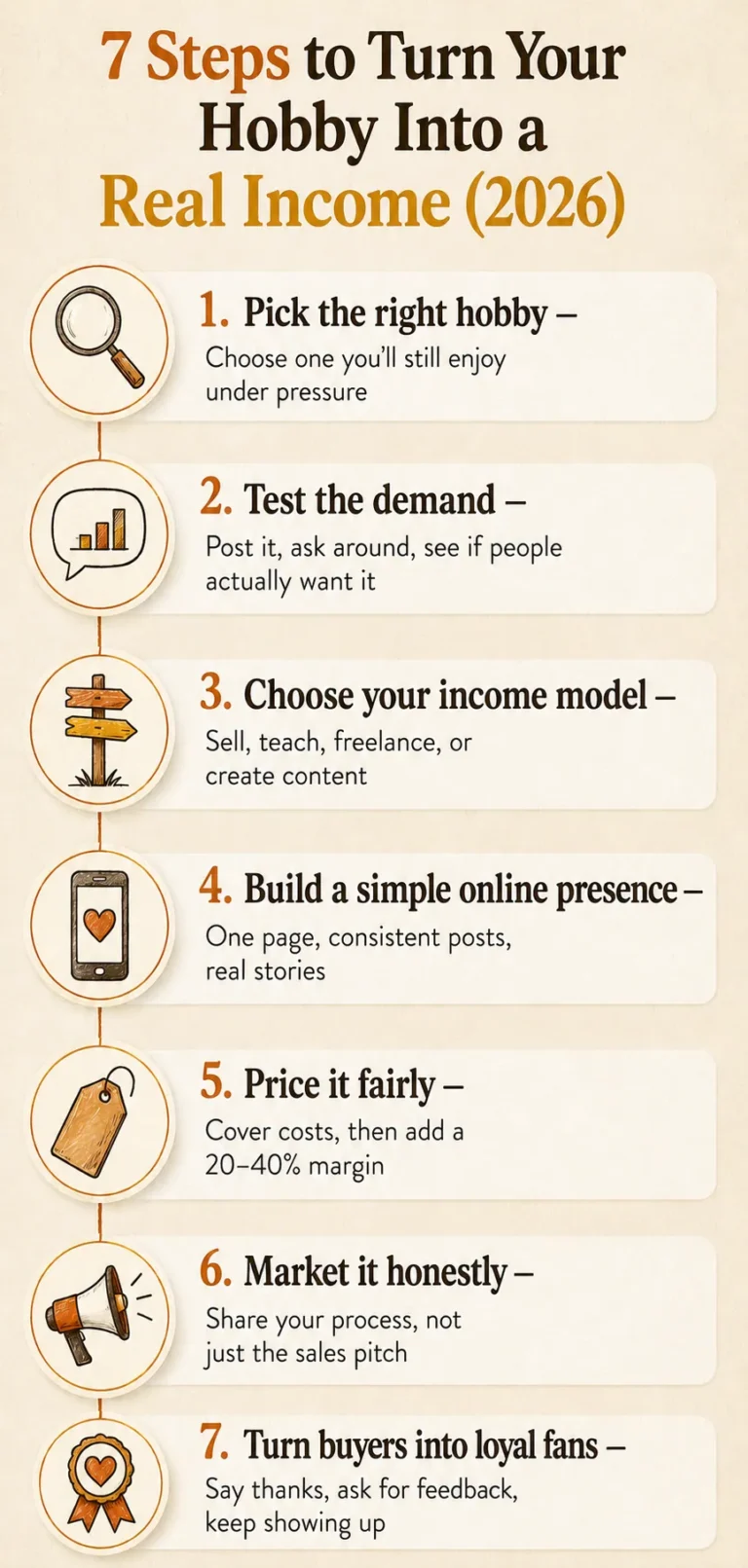
Pick the right hobby, test the demand, choose an income model that fits your life, build a simple online presence, price your work fairly, market with honesty, and focus on turning buyers into loyal, returning fans.
Conclusion
You don’t need to be perfect. You don’t need thousands of followers or expensive tools to begin.
You just need to start.
Every successful hobby-based income stream began with someone who decided to try, even without knowing exactly how it would turn out.
So take one small step today. Post that first picture. Message that first potential customer. Set that first fair price.
Your hobby has more value than you think. It’s time to let it start paying you back.
If this guide helped you, save it, share it with a friend who needs it, and come back for more simple, honest, step-by-step guides on building real income from the things you already love doing.
Frequently Asked Questions
Can I really turn my hobby into a real income without quitting my job?
Yes. Most people start part-time on weekends or evenings and grow slowly before it ever becomes full-time.
How long does it take to earn money from a hobby?
It varies a lot. Some people get their first sale within weeks, while building a steady income stream can take several months of consistent effort.
Do I need money to start?
Not always. Many hobby-based businesses start with materials you already own, plus free social media platforms.
What if my hobby doesn’t feel “sellable”?
Almost every skill has an audience somewhere. The real key is finding who values it and where they spend time online.
Which platform is best to start selling on?
There’s no single best platform for everyone. Etsy suits physical products, YouTube and blogs suit content creators, and freelance sites suit service-based skills. Start where your ideal customer already spends their time.